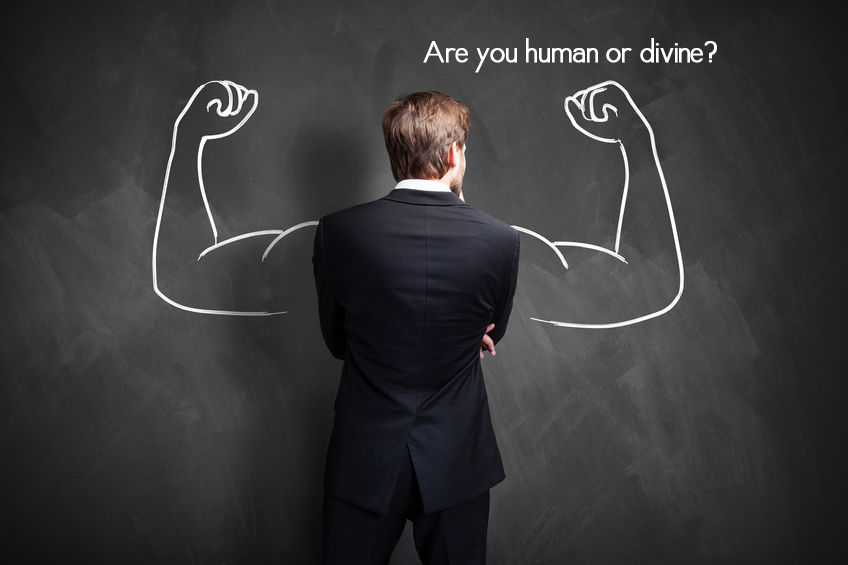
In honor of George Washington, can we talk about truth?
I ask because the issue arose while commiserating recently with a friend. She was bewildered and hurt by her husband’s suddenly pubescent behavior. At 40, he had become obsessed with the gym, his brand new muscles, rap artists and flirtatious young women who thought he was buff.
“Is it a mid-life crisis?” she wondered.
The Loud Mouth also wondered what was the underlying truth. I didn’t doubt that my friend’s husband was going through a crisis. Actually, I found it rather ironic that his intolerance over her failure to wilt into a dead faint whenever he stepped out of the shower or entered a room actually rendered him rather unattractive, except to someone who valued superficiality.
This poor man truly had created a crisis. I simply wasn’t sure it had anything to do with mid-life.
 Human Life Can Be Calculated
Actors on Earth’s theater who identify themselves as their characters—as humans—have a beginning, a middle and an end. For these fine folks, everything and everyone is physical. Nothing exists unless they can see, feel, taste, touch or hear it.
Most of them believe that they were made in God’s image. But what is that image? It changes from one culture or country to another. Always has. As Greek philosopher, theologian and religious critic, Xenophanes (c.570 – c.475 BC), once wrote:
“Ethiopians say that their gods are snub-nosed and black and Thracians that theirs have blue eyes and red hair….If cattle and horses or lions had hands, or were able to draw with their hands and do the work that men can do, horses would draw the forms of the gods like horses, and cattle like cattle, and they would make their bodies such as they each had themselves.”
Simply put: Those who believe that humans are merely physical bodies typically worship a god who looks human, complete with body, gender and a defined space in which to live. Their anthropomorphic god behaves in ways that are more characteristic of humans, rather than divine (2 Kings 1:10):
- He is volatile, violent and vindictive (Ez. 25:17);
- He changes His mind (Gen. 8:21);
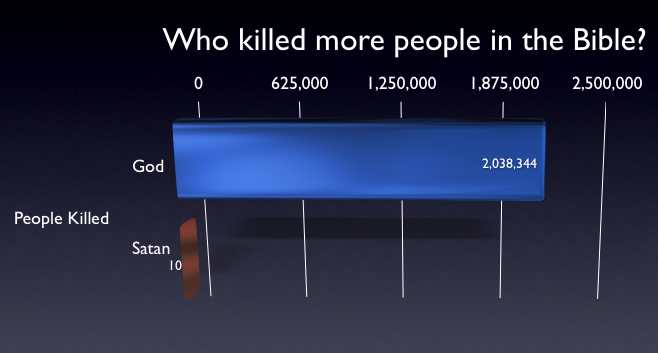
- He solves problems by slaughtering or sadistically torturing His children to death—one at a time (Mark 15:25) or all at once (Gen. 6:17);
- He is jealous (Ex. 34:14);
- He demands obedience and rewards it with physical bounty (2 Cor. 7:15);
- He brutally punishes disobedience forever and ever (2 Peter 2:4);
- For all of this and more, they say, he is “worthy to be praised” (Ps. 18:3).
The Divine on a Calculator
There are others who also believe that they were made in the image of God, but they perceive God to be invisible, invincible and immortal spirit (John 4:24). They believe God is everywhere, rather than somewhere.
They also believe that God is Love (1 John 4:8), and embrace Paul’s definition of love captured in 1 Corinthians 13:4-8: Love is patient, kind, not envious, boastful or proud. Love does not dishonor others, is not self-seeking or easily angered. It keeps no record of wrongs. It does not delight in evil but rejoices with the truth. Love always protects, always, trusts, always hopes, always perseveres, and never fails.
For these believers, anything that claims to be said by God, written by God or done by God, but does not fit within Paul’s definition of Love, mocks and demonizes God.
As humans, we create crises, not because of our age or any fear of aging. Generally, it’s because we choose to worship our mortal body costumes. We’ve made them our only reality. We’ve diminished ourselves to a calculable beginning, middle and end. But think about it:
- If we are made in God’s image, are we spirit or is God a man?
- If God is spirit, as John claims, how do we calculate God’s beginning, mid-life and ending?
- If we are spirit, how do we calculate our own beginning, mid-life and ending?
We choose how we will perceive ourselves and how we will perceive our God. We can be, think and act as if we’re merely humans marching toward death, even on the way to the gym. We also have the option of traversing this world as divinely as humanly possible.
Our outcomes—our joys, our pains and our suffering—reflect our truth. For better or worse.

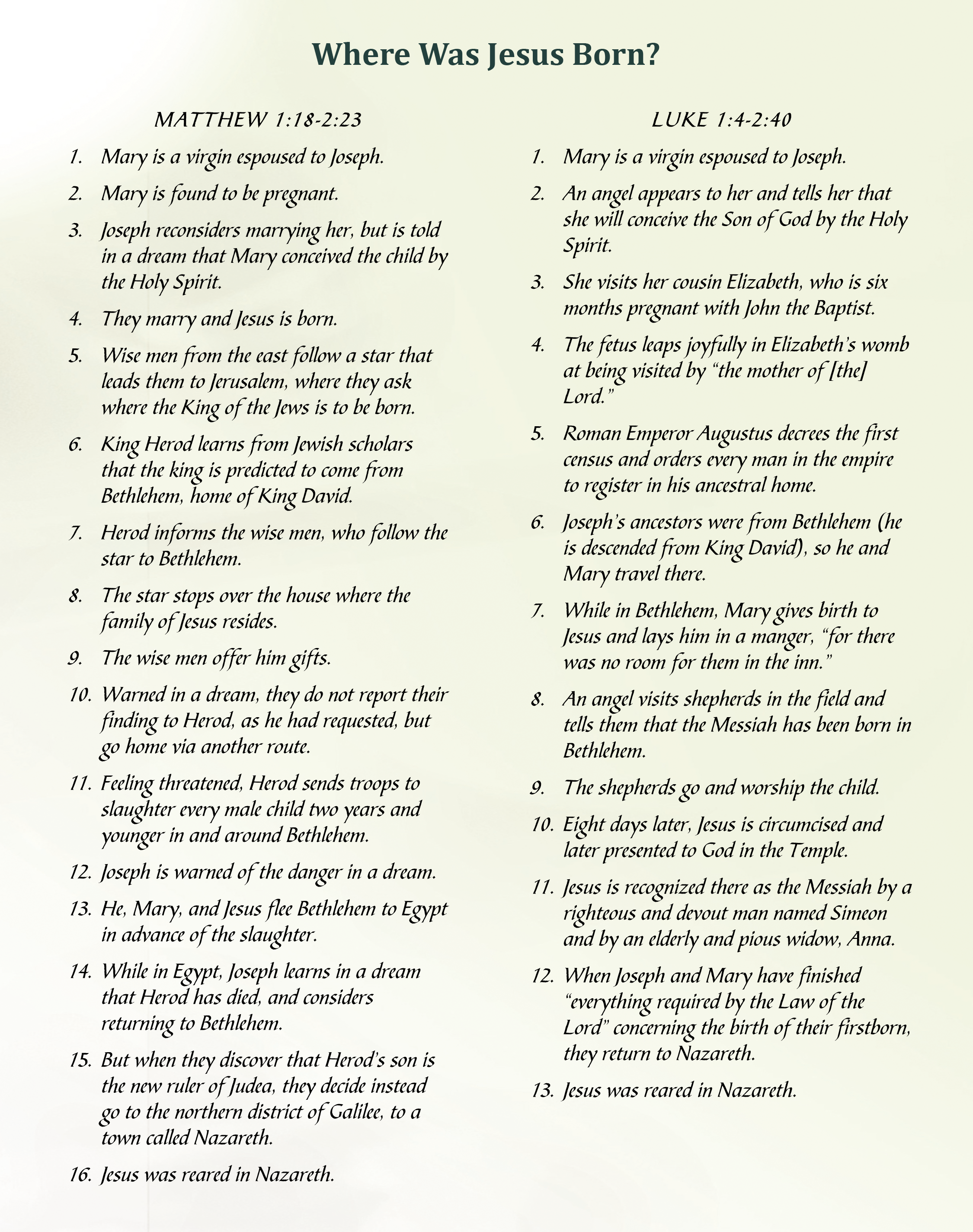

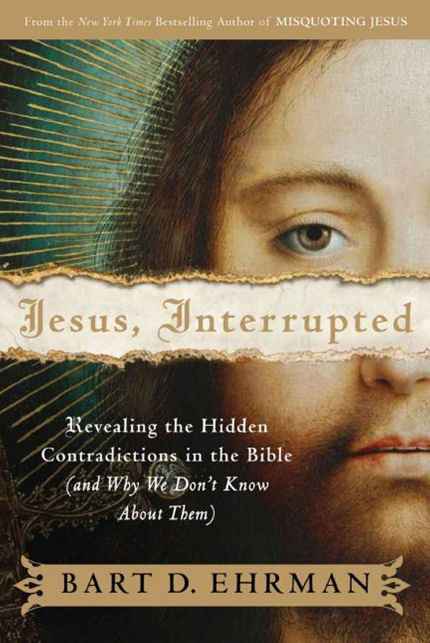 Plus, as Ehrman pointed out in his latest book. “Jesus, Interrupted: Revealing the Hidden Contradictions in the Bible (And Why We Don’t Know About Them),” we tend to read the Bible vertically, from the top of the page to the bottom—the same way we read other books. And that could be a problem.
 A spiritual teacher I highly respect recently confided to me, “Contrary to the view I usually hold of human beings as inherently holy, I have trouble holding that view of one of the political candidates. I would have less trouble holding Hitler as holy; at least Hitler had some passion. This guy, no matter how hard I try to see him otherwise, seems empty, soulless, and zombie-like to me. And I wonder why I can’t seem to get past this with him. He makes me shudder.”
 When you watch Life long enough from the balcony, you can glimpse evidence that “the script is already written.” This U.S. presidential election drama is no different: The votes were cast and counted eons ago, just as the evolution and devolution of this planet were obvious in the Big Picture.
 These bad actors have reason to dread the return. They violated a rule so simple and so basic that some call it golden: They treated others in ways they wouldn’t want to be treated. Now, they will be treated the way they treated others. Ergo, the queasy feeling in their celestial bellies. Diagnosis: Bad karma.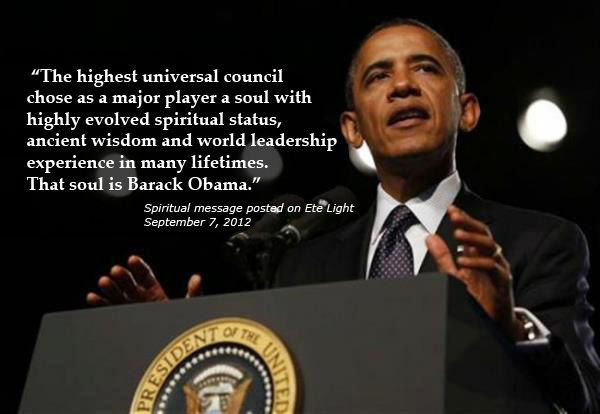

 “His best work is still to come, and he is well aware of his destiny to lead the people out of the darkness. He is a highly spiritual soul and will, with our help and protection, work with us to speedily transform your experiences into ones of happiness and release from the Draconian laws that rule your lives.” January 2011 spiritual message, posted on Ete Light
  Shocked? Appalled? Can’t understand why anyone would believe something so preposterous?